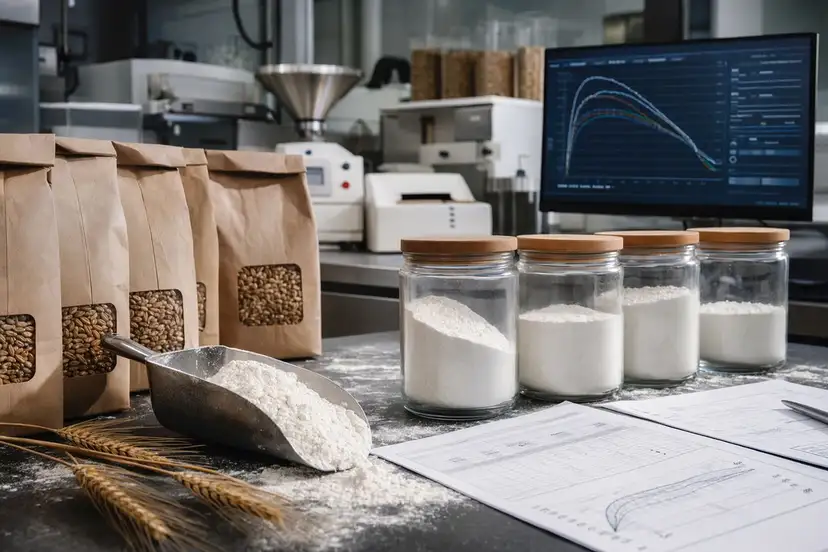
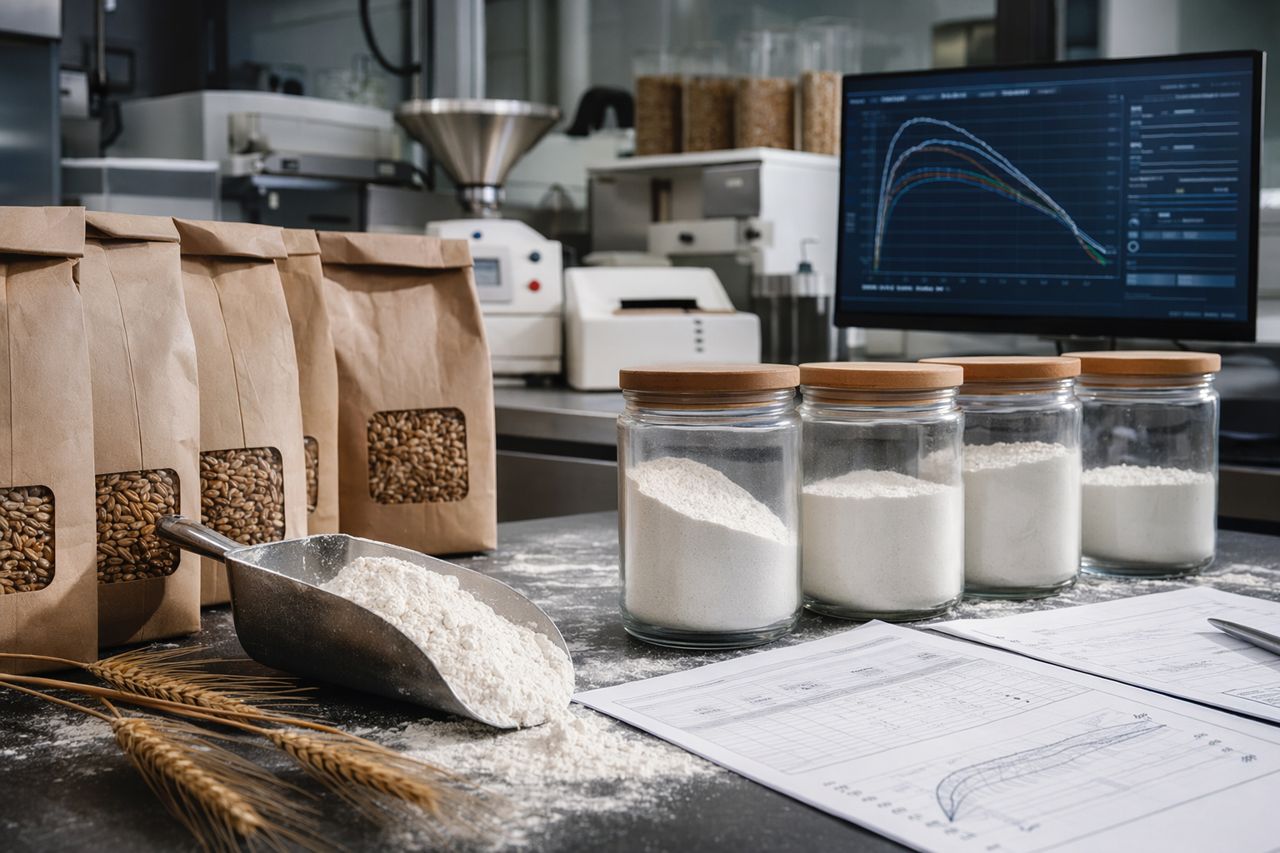
How Wheat Origin Changes Flour Treatment Decisions Across the Year
A flour mill guide to adjusting enzyme treatment as wheat origin, crop year, ash, protein, starch damage, and dough behavior shift across the buying season.
Request pricing A flour mill guide to adjusting enzyme treatment as wheat origin, crop year, ash, protein, starch damage, and dough behavior shift across the buying season.
Request pricingFor a flour mill, wheat origin is not just a purchasing detail. It changes the treatment decision.
The same flour specification can be reached through very different grain routes: a higher-protein North American blend, a more extensible European crop, a Black Sea parcel with different enzyme background, or a domestic wheat stream that shifts after storage. Each origin brings its own protein quality, ash pressure, starch damage, water absorption, native enzyme activity, and dough behavior. Those factors decide whether flour treatment should support gas production, dough strength, extensibility, machinability, volume, crumb, or tolerance.
That is why an enzyme supplier for flour mill treatment should not talk only in generic product names. The useful conversation starts with crop reality, mill data, and the customer application behind the specification.
Protein remains one of the first numbers buyers and quality teams review, but flour performance is not explained by protein alone.
Two wheat origins with the same protein level can behave differently in dough because of:
For treatment decisions, the key question is not only whether protein is high or low. It is whether the flour has the right balance of strength, fermentation response, water handling, and process tolerance for the customer using it.
A bakery flour with adequate protein may still need better loaf volume or crumb softness. A biscuit flour may need controlled extensibility without tightening. A noodle flour may require stable color and bite. A pizza flour may need dough that opens without tearing and tolerates cold fermentation. Each case can require a different enzyme position, even when the purchase specification looks familiar.
Many mills see a repeating pattern: the flour target remains constant, but the wheat base moves.
At harvest, a new crop can arrive with different moisture history, kernel hardness, and native enzyme background. As the season progresses, storage changes grain handling and milling behavior. Later in the year, procurement may introduce replacement origins or blend adjustments to protect cost, protein, or supply continuity.
That creates treatment drift.
A dosage position that worked in one quarter may become too assertive, too mild, or simply misaligned with the new flour behavior. The issue often appears first in customer feedback rather than in a headline certificate number:
In many cases, the flour has not failed specification. It has shifted inside the specification window. Enzyme treatment should be reviewed at that level of sensitivity.
It is tempting to assign a fixed treatment strategy to each wheat origin. In practice, that is risky.
Origin gives clues, but crop year and milling practice decide the final flour. A hard wheat source may support strength but still produce a flour that needs better fermentation response. A softer origin may mill cleanly but require careful handling of extensibility. A blend designed to manage ash may change damaged starch and water absorption. A parcel with good analytical numbers may behave differently under the customer’s actual process.
Aleuron Works approaches origin-based treatment as a controlled adjustment process:
This keeps treatment practical. The objective is not to add complexity. It is to protect flour consistency while procurement and grain quality move.
Some flour streams meet the protein target but lack the mixing tolerance or gas retention the customer expects. In these cases, the issue may sit in gluten quality, starch damage, or the balance between extensibility and resistance.
Treatment may focus on strengthening support, improved dough stability, and better fermentation tolerance. The goal is not to make the flour artificially strong. It is to reduce the gap between certificate protein and actual dough behavior.
Certain wheat blends can deliver good resistance but produce dough that is difficult to open, sheet, or mould. This can affect flatbreads, pizza bases, laminated goods, and other processes where extensibility matters.
Here, treatment decisions must be careful. Over-tightening the dough creates more problems. The right enzyme strategy should support processability without weakening structure beyond the customer’s needs.
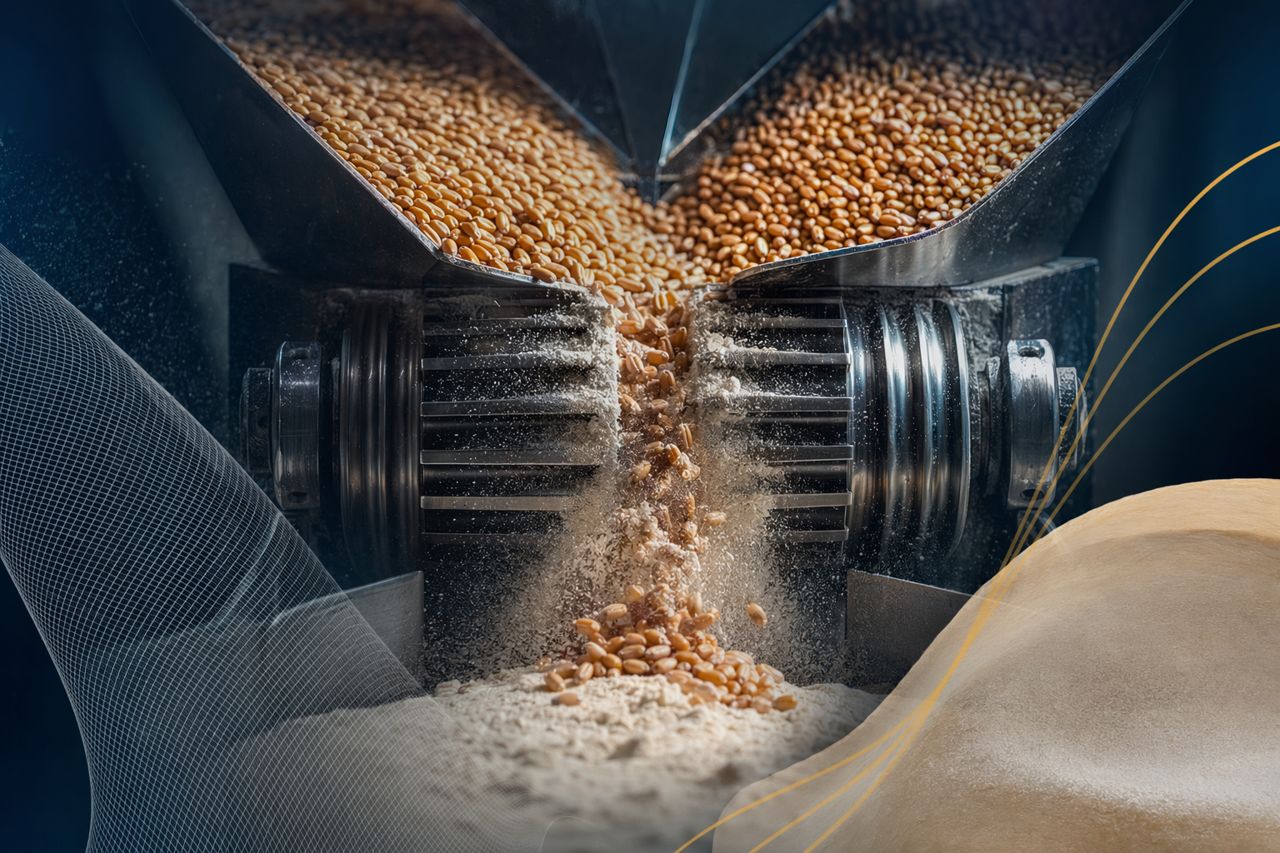
Kernel hardness, roller settings, and extraction decisions influence damaged starch. As origins change, mills may see water absorption and dough viscosity move even when ash and protein remain acceptable.
Treatment should be reviewed alongside milling settings and end-use requirements. For some applications, improved water handling is valuable. For others, excessive softening or stickiness must be avoided. The correct treatment position depends on how the flour behaves under the customer’s mixing, resting, proofing, and baking conditions.
Weather conditions, harvest timing, and storage history can affect the native enzyme profile of wheat. That can alter fermentation response, crumb, crust color, and dough stability.
In these cases, treatment is a fine adjustment. More is not automatically better. The mill needs a position that supports predictable performance without pushing flour outside customer tolerance.
As procurement or extraction strategy changes, ash can become harder to control. Higher ash pressure may influence color, dough feel, and customer perception, especially in refined flour applications.
Enzyme treatment cannot replace good milling separation, but it can help manage performance where the flour is technically within specification but behaving differently in the plant or bakery.
A practical flour mill program should include enzyme review points across the year. The timing will vary by sourcing model, but the logic is consistent.
When new crop wheat enters the grist, compare flour behavior against the outgoing crop. Do not rely only on protein and ash. Review dough development, stability, extensibility, fermentation response, and finished product performance.
This is often the right moment to confirm whether the existing treatment remains valid or needs a controlled adjustment.
When procurement changes origin or blend ratio, the treatment position should be checked before customer complaints appear. Even a cost-driven adjustment can change dough behavior.
A short validation trial can identify whether the current enzyme package still supports the target application.
If a customer updates process conditions, product format, or acceptance criteria, enzyme treatment may need to change even if the wheat base does not. A mill supplying bread flour, biscuit flour, noodle flour, and pizza flour should avoid a one-treatment mindset.
As wheat ages in storage, milling behavior and flour performance can shift. A treatment that was correct early in the season may require refinement later, especially where customer processes are sensitive to dough tolerance or fermentation response.
Before adjusting treatment, it helps to define the real problem. Useful questions include:
The answers help prevent overcorrection. They also make it easier for procurement, milling, QA, and technical sales teams to work from the same evidence.
Aleuron Works supplies enzyme solutions for flour mills that need consistent performance across variable wheat origins. We focus on practical treatment design for mill-floor realities: specification windows, customer complaints, dosage control, blending changes, and trial validation.
Our work can support:
The process starts with your flour target and the behavior you need to correct. From there, we help define a treatment approach, recommend trial structure, and support scale-up decisions with clear operating guidance.
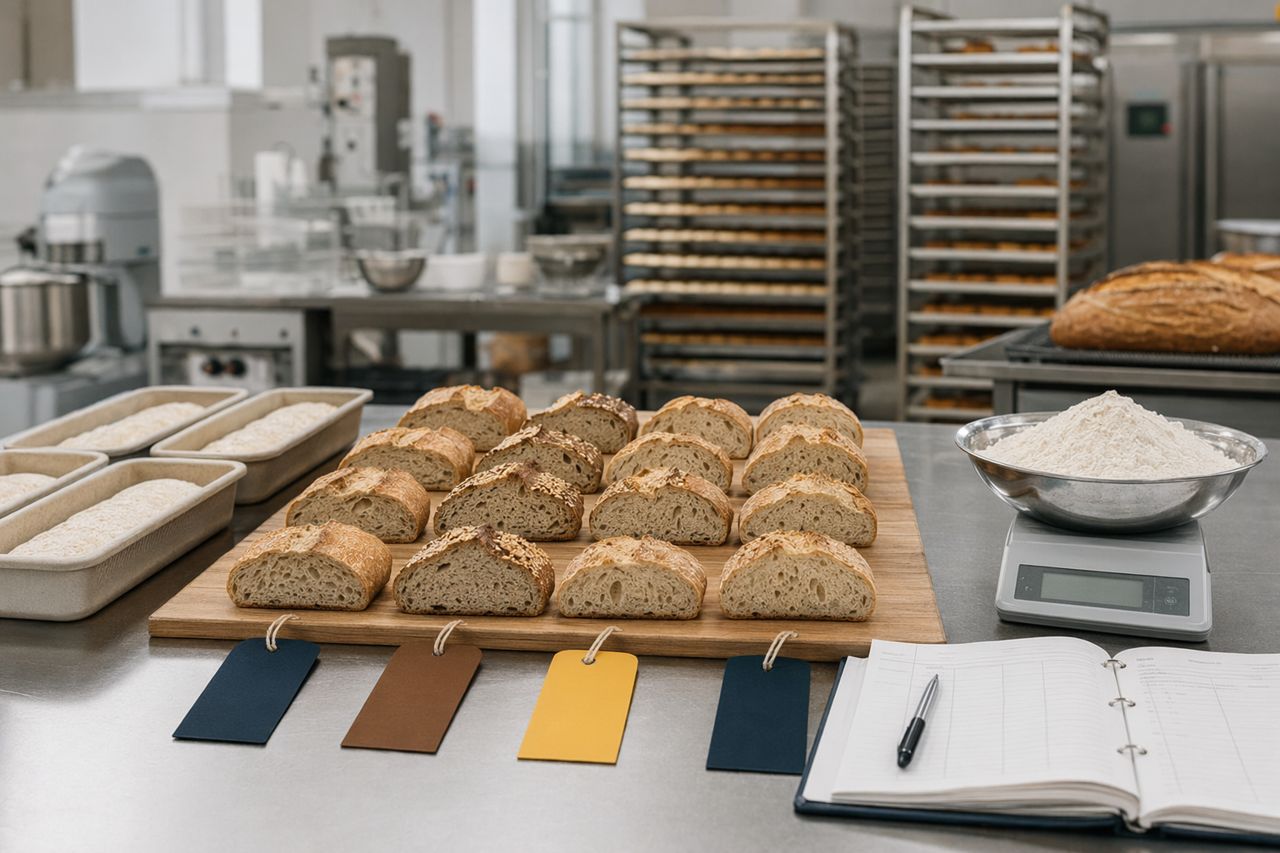
A good trial does not simply ask whether an enzyme works. It asks whether the treatment improves the right performance attribute without creating a new problem.
For flour mills, that means trials should compare treated and untreated flour against the same wheat base, the same customer application, and the same relevant process conditions. The outcome should be easy for production and QA teams to interpret:
This is where origin-aware treatment becomes valuable. It connects grain purchasing reality with customer performance, without turning enzyme use into guesswork.
If wheat origin, crop year, or blend changes are making flour performance harder to hold, Aleuron Works can help you review the treatment position and plan a practical validation trial.
Use the on-site request a quote form to share your flour application, target specification, current performance issue, and expected wheat origin changes. We will respond with a treatment recommendation pathway suited to your mill and customer requirements.
Tell us your application and volume — we reply with pricing and lead time.