Rheology Instruments in Flour Mill QA | Aleuron Works
How farinograph, alveograph, extensograph, and pasting data help flour mills predict dough behavior, control treatment decisions, and reduce risk before trial baking.
Request pricing How farinograph, alveograph, extensograph, and pasting data help flour mills predict dough behavior, control treatment decisions, and reduce risk before trial baking.
Request pricingIn a flour mill, trial baking is often treated as the final proof. It shows how flour behaves in a real formula, under real mixing, fermentation, sheeting, proofing, or baking conditions. But trial baking is not where the first warning signs should appear.
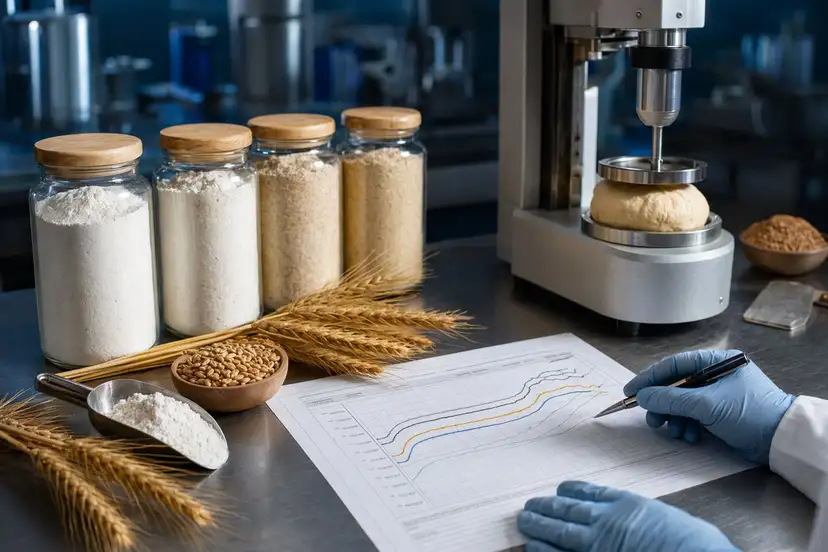
Rheology instruments give quality teams an earlier read on dough behavior. They help connect wheat blend realities, ash and protein position, starch condition, damaged starch, water response, and enzymatic treatment into one practical question: will this flour stay inside the customer’s operating window?
For mills using treatment systems, rheology is especially useful. It does not replace baking. It makes baking more targeted. When the curve changes before the oven test, the mill can adjust with more confidence and less guesswork.
Aleuron Works supports mills that need treatment decisions to align with flour specification, customer process behavior, and repeatable dosage control. As an enzyme supplier for flour mill treatment, our role is not simply to offer ingredients. It is to help QA and production teams validate what those ingredients are doing inside the flour system.
Trial baking answers the commercial question: does the flour perform for the customer application?
Rheology answers several earlier operational questions:
That earlier view matters because mills rarely work with perfect wheat. Protein may be acceptable but not fully functional. Ash may be within contract but still reflect extraction pressure. Damaged starch may shift water absorption and mixing behavior. New crop transitions may change dough feel before headline specifications move dramatically.
Rheology helps reveal those changes in a format the quality team can track, compare, and discuss with production.
Different instruments do not tell the same story. A strong QA program uses them as complementary views rather than competing answers.
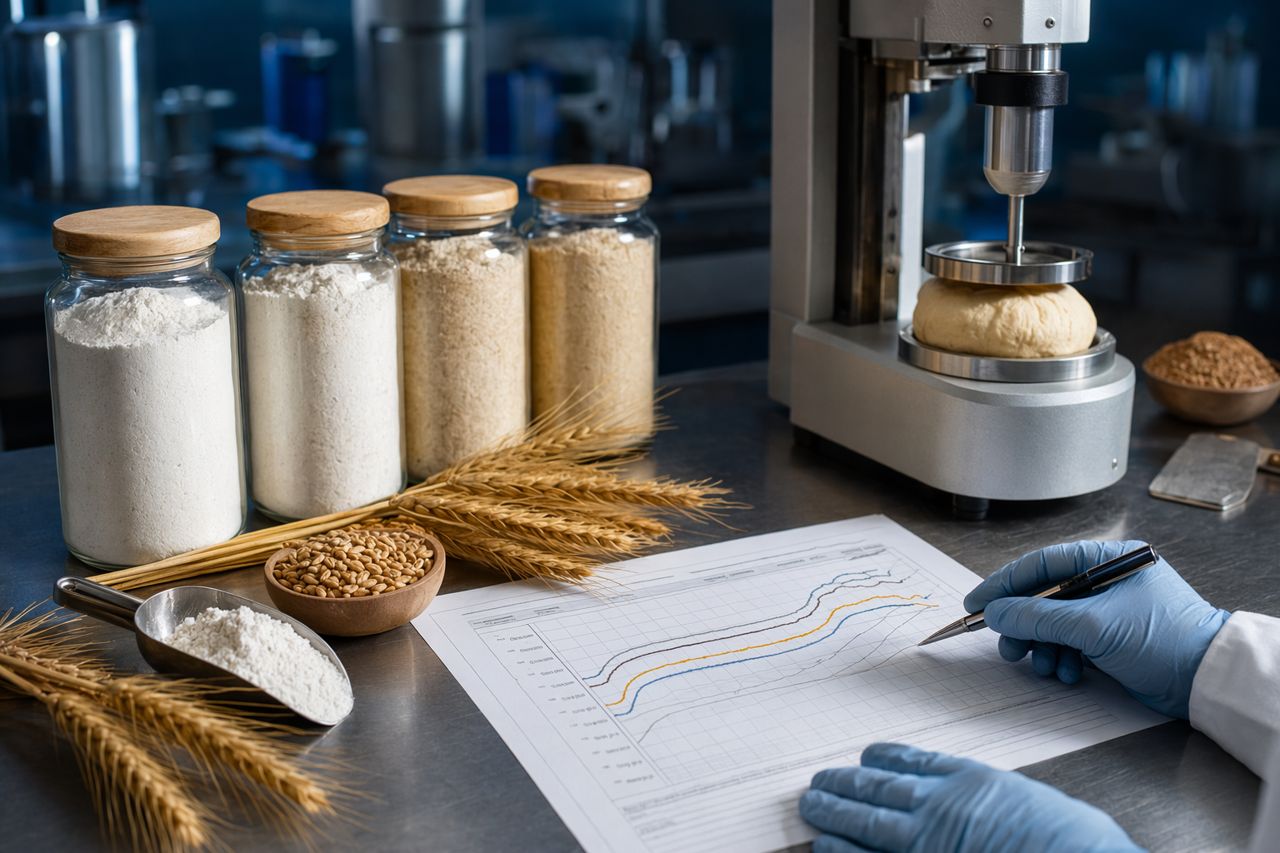
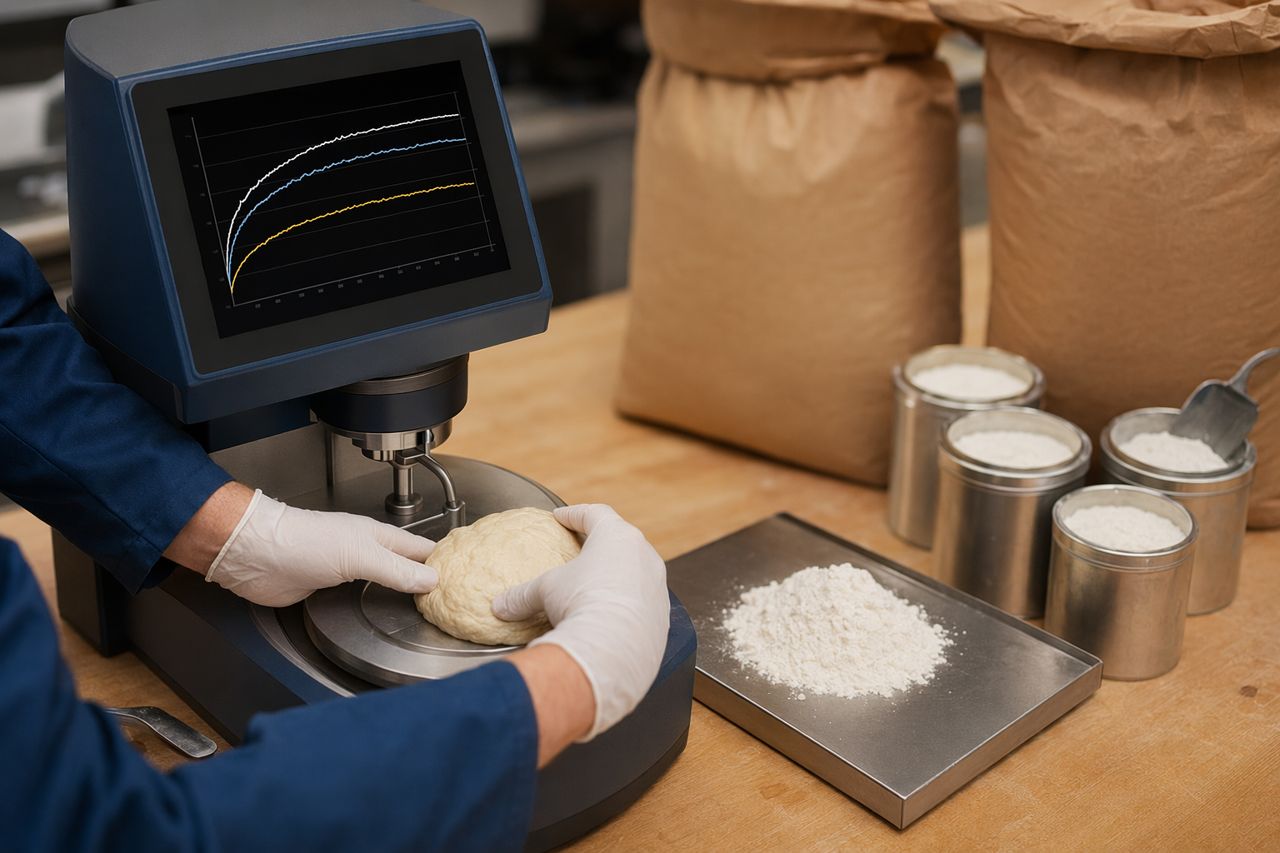
Mixing curves help show how flour hydrates, develops, and holds structure under controlled mixing. For mill QA, the most valuable signals are often practical rather than academic:
When enzyme treatment is involved, mixing profiles can show whether the flour is moving toward a more workable processing range or becoming too sensitive. A treatment decision that looks modest on paper may produce a meaningful shift in dough tolerance.
Alveograph-type curves help quality teams understand dough resistance, extensibility, and balance. This is particularly useful when serving bakeries, pizza producers, laminated dough plants, flatbread lines, or other customers with defined handling expectations.
A flour may meet protein specification and still be too tight, too short, or too relaxed for the intended process. Rheology can show that distinction before customer feedback arrives.
For treatment work, this matters because enzymes can influence dough handling, gas retention, extensibility, and process tolerance. The goal is not to create a dramatic curve. The goal is to shift the flour into a stable, usable range for the customer application.
Extended resting and stretching behavior can reveal how dough changes after hydration. That is important because many industrial processes do not evaluate flour at the first point of mixing only. Dough may rest, ferment, sheet, divide, or be held before final forming.
For mills, this view is valuable when customers report that a flour behaves well at mixing but changes later in the process. It can also help identify whether treatment is supporting tolerance or contributing to excessive relaxation.
Starch-side behavior affects more than laboratory curves. It can influence crumb character, processing tolerance, softness perception, and product consistency.
Pasting profiles can help mills understand how starch condition, damaged starch, and amylase activity interact. This is especially useful when wheat changes, sprout risk appears, or the mill is balancing flour for bakery performance.
Treatment decisions on the starch side should be made carefully. A controlled adjustment can improve fermentation support, volume potential, or crumb qualities. An uncontrolled adjustment can create stickiness, weak handling, or inconsistent baked results.
Good rheology practice is not about chasing a perfect curve. It is about building a decision system.
A practical mill QA workflow usually compares:
This structure helps separate normal flour variation from actual treatment effect. It also reduces the risk of making dosage changes based on one curve or one atypical wheat blend.
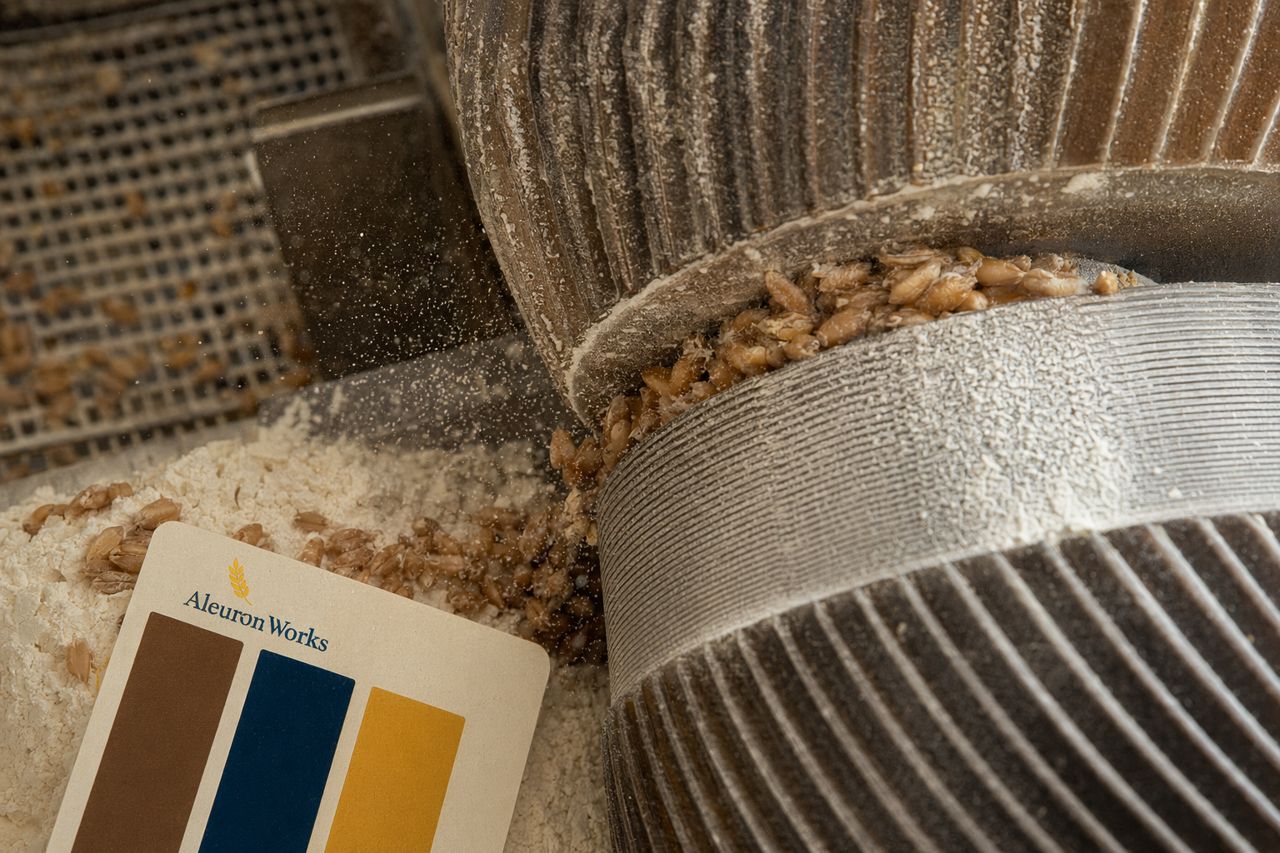
The strongest results come when rheology is connected to production reality: wheat grist, extraction changes, additive feeder performance, flour age, storage condition, and the customer’s process expectations.
Enzymes are precise tools, but flour is a variable biological material. That means treatment must be validated against the actual flour stream and the intended customer use.
Rheology can help show whether a treatment is:
For quality managers, the key is not whether the enzyme has a theoretical function. The key is whether the treated flour behaves more consistently against customer specifications.
New crop wheat often changes dough behavior before the mill has fully recalibrated blend strategy. Rheology can help QA identify whether treatment should remain steady, be moderated, or be adjusted to maintain customer performance.
Protein content does not fully describe protein quality. A flour can meet specification and still produce tight, weak, sticky, or unstable dough. Rheology gives the quality team a better view of functional performance.
Customers may describe flour as “running short,” “too tight,” “sticky,” “weak in proof,” or “not carrying volume.” Those terms are commercially meaningful but not always precise. Rheology helps translate feedback into a structured investigation.
When mills consider a new enzyme system or dosage window, rheology helps screen options before committing to full trial baking. This reduces waste and makes the bake trial more focused.
Some mills serve several applications from related flour streams. Rheology can help identify where treatment flexibility is needed and where flour should remain closer to baseline.
Aleuron Works supports treatment programs with a practical validation mindset. We look at the flour first, then the customer application, then the treatment objective.
A typical discussion includes:
This approach keeps the conversation grounded in mill operations. The best treatment is not the one that creates the largest lab shift. It is the one that helps the mill deliver repeatable flour performance with controlled handling risk.
Rheology curves are powerful, but they must be interpreted with discipline.
A quality team should ask:
This is where supplier support matters. An enzyme supplier for flour mill treatment should be able to discuss more than product selection. They should be able to help connect curve movement, flour specification, customer application, and validation steps.
The real value of rheology is confidence before commitment.
It helps the mill move from “this flour should work” to “this flour is behaving within the range we expect.” It also helps avoid overcorrection. In flour treatment, too little adjustment may leave customer issues unresolved. Too much adjustment can create new handling problems.
For a quality manager, the goal is a stable decision process:
That is how enzyme treatment becomes part of flour mill control rather than a reactive fix.
If your QA team is reviewing rheology data, validating a treatment change, or preparing for a customer-specific flour trial, Aleuron Works can help assess the performance target and recommend a controlled enzyme treatment path.
Request a quote through our on-site form and include your flour type, target application, current treatment status, and the rheology instruments used in your QA workflow.
Tell us your application and volume — we reply with pricing and lead time.