From Lab Bake to Mill Release: Building a Flour Correction Approval Workflow
For a flour mill, enzyme correction is not a side decision. It sits between wheat variability, ash and protein realities, dough behavior, customer specifications, and the production team that has to release flour with confidence.
The strongest programs treat correction as a controlled workflow: define the flour problem, validate in the lab bake, set a dosage window, run a disciplined mill trial, and release only when the treated flour behaves consistently against the customer’s use case.
Aleuron Works supports mills that need an enzyme supplier for flour mill treatment with practical trial structure, application guidance, and specification-minded documentation. The goal is not to add complexity. The goal is to make adjustment repeatable.
Why correction workflows matter in the mill
Wheat changes. Tempering response changes. Extraction pressure changes. Protein quantity does not always predict gluten quality. Ash targets may be met while dough behavior still drifts. A flour can look acceptable on the certificate and still create mixing, fermentation, sheeting, volume, or tolerance problems for the customer.
A correction workflow gives quality teams a way to move from observation to release without relying on guesswork.
A good workflow helps you:
- Connect customer complaints to measurable flour behavior
- Separate wheat-driven variation from process-driven variation
- Choose enzyme treatment based on the flour’s actual baking gap
- Control dosage before production exposure
- Protect customer specifications and mill reputation
- Document the decision trail for quality, sales, and technical service teams
Start with the release question, not the additive
Before selecting any treatment, define the release question clearly.
Instead of asking, “Which enzyme should we add?” ask:
- Is the issue dough strength, extensibility, fermentation tolerance, volume, crumb, machinability, or shelf-life behavior?
- Is the flour intended for pan bread, buns, flatbread, crackers, noodles, pizza, or general-purpose blending?
- Is the customer specification narrow, functional, or mostly analytical?
- Is the problem present across silos, wheat origins, extraction levels, or only one production run?
- Will correction be used for a single lot, a seasonal wheat shift, or an ongoing flour grade?
This keeps the workflow anchored to mill-floor decision making. Enzyme treatment should correct a defined flour performance gap, not compensate for an undefined concern.
Step 1: Build a baseline flour profile
The first approval gate is baseline characterization. The objective is to understand what the untreated flour is doing before any correction is considered.
For most mills, this baseline includes:
- Ash and protein context
- Moisture and extraction history
- Wheat blend and origin notes
- Tempering and milling conditions
- Dough mixing response
- Absorption tendency
- Extensibility and resistance behavior
- Fermentation tolerance
- Final product results from a standard lab bake
The important point is not to collect every possible number. It is to capture the few indicators that explain the customer’s functional requirement.
A high-protein flour can still lack tolerance. A low-ash flour can still underperform in volume. A flour within analytical specification can still drift in dough handling. The baseline profile should make those realities visible.
Step 2: Match treatment logic to the flour gap
Different enzyme systems influence different parts of flour performance. The approval workflow should connect the treatment logic to the actual gap found in the baseline bake.
Typical correction objectives include:
- Improving fermentation tolerance where dough weakens too early
- Supporting loaf volume without making dough sticky
- Adjusting extensibility for sheeting or forming applications
- Improving machinability in high-speed lines
- Managing crumb softness and keeping quality where appropriate
- Reducing variability between wheat lots or mill streams
For example, a bread flour that meets protein specification but produces tight volume may need a different correction approach than a flour that over-softens during proof. A cracker flour with poor sheeting behavior requires a different evaluation logic than a pan bread flour with weak gas retention.
Aleuron Works frames enzyme selection around the intended flour application, the customer’s process, and the mill’s ability to dose consistently.
Step 3: Design a lab bake that can approve or reject
The lab bake should not be a demonstration. It should be a decision tool.
A useful lab bake compares untreated flour against one or more corrected treatments under the same process conditions. It should be designed to answer whether the correction improves the specific release concern without creating new risk.
A disciplined lab bake includes:
- A clearly defined control flour
- Treatment options arranged around a practical dosage range
- The same mixing, resting, proofing, sheeting, or baking conditions across samples
- Evaluation against the customer’s likely processing conditions
- Documentation of both dough behavior and finished product results
- A pass, hold, or reject decision for each treatment option
The best lab bakes look beyond the first visible improvement. A flour correction that increases volume but creates sticky dough may not be viable. A treatment that improves extensibility but narrows process tolerance may create production risk. A correction workflow must approve the whole behavior package, not a single attractive result.
Step 4: Set a dosage window, not just a target
Mills operate with real feeders, real flow variation, real flour transfer, and real production timing. That is why a single theoretical target is weaker than a validated dosage window.
A dosage window defines:
- The lowest treatment level that gives the intended correction
- The preferred operating point for routine production
- The upper boundary before dough handling or product quality becomes undesirable
- The conditions that require re-checking the window
This is especially important when flour is used by demanding customers with tight process expectations. A correction that works only at one narrow point may be hard to control at scale.
Aleuron Works helps mills structure dosage control around the realities of flour flow, micro-ingredient addition, blending, and release testing.
Step 5: Translate the lab result into a mill trial plan
A mill trial should be planned before product enters customer supply. The purpose is to confirm that the lab-approved correction behaves the same way under production conditions.
A practical mill trial plan should identify:
- Which flour stream, blend, bin, or finished grade will be treated
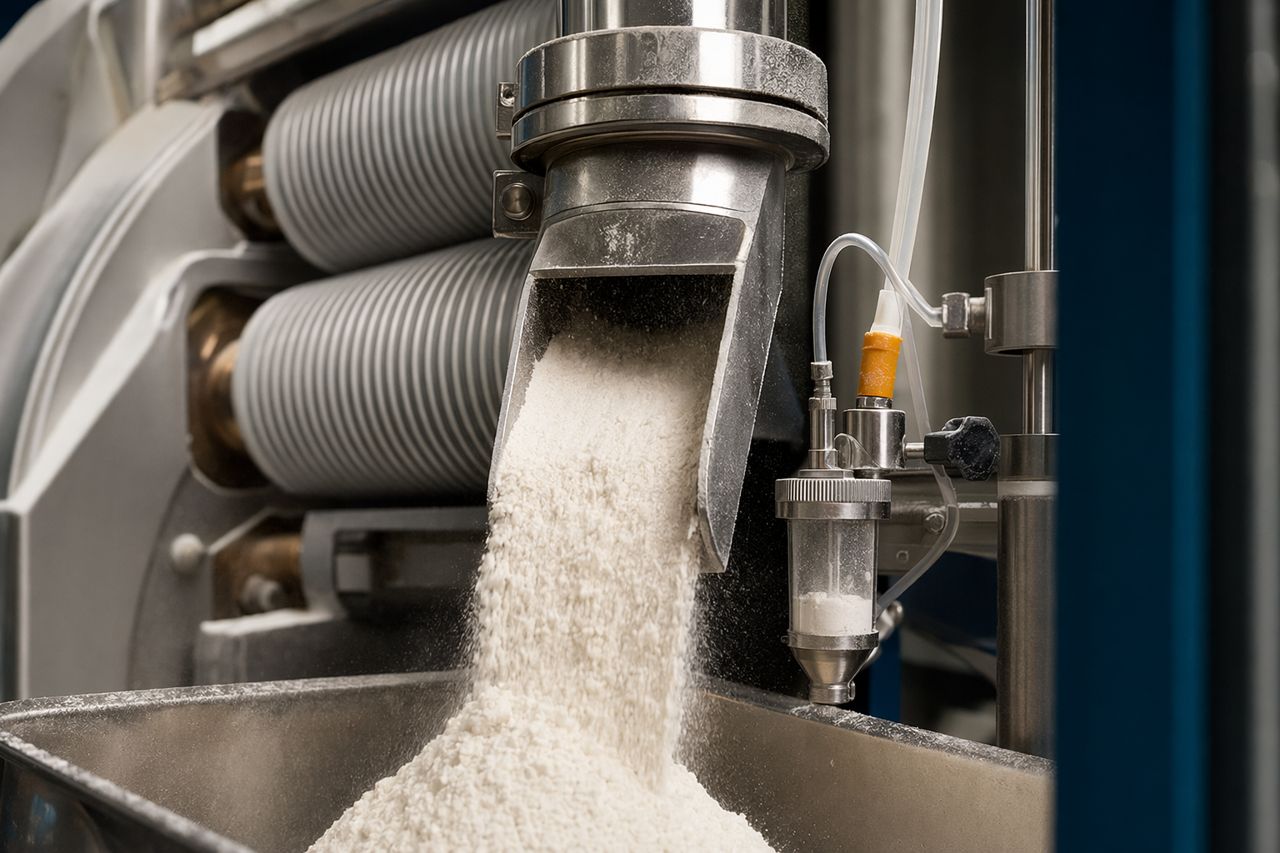
- Where and how the treatment will be introduced
- How dosage will be verified operationally
- How long the trial needs to run before sampling is representative
- Which samples will be retained
- Which release checks will be completed before shipment
- Who has authority to approve, hold, or stop the run
This is where many correction programs become fragile. If the production team does not know the trial boundaries, the quality team cannot interpret the result. If samples are taken too early, the treated flour may not represent the released lot. If feeder checks are not documented, a strong lab result can become difficult to defend.
Step 6: Confirm performance against the customer specification
A mill release decision should connect the corrected flour to the customer’s requirement, not only to internal preference.
Depending on the flour grade, confirmation may include:
- Internal analytical checks
- Dough handling review
- Lab bake confirmation
- Comparison against retained customer-approved flour
- Finished product scoring
- Customer-facing technical notes when needed
The final release question is simple: does the treated flour meet the customer’s functional expectation with acceptable mill control?
If yes, the treatment can move into approved use. If not, the workflow should identify whether the issue is treatment type, dosage, wheat blend, milling condition, or customer process mismatch.
Step 7: Lock the documentation before routine use
Once approved, enzyme correction should become part of a controlled quality system.
A complete approval file may include:
- Baseline flour profile
- Treatment objective
- Lab bake results
- Dosage window and preferred operating point
- Mill trial record
- Sampling plan
- Release decision
- Customer specification linkage
- Change-control triggers
Change-control triggers are especially important. A correction approved for one wheat blend, extraction range, or customer application should not automatically be assumed valid for a different scenario.
Common re-validation triggers include:
- New crop transition
- Major wheat origin shift
- Protein or ash movement outside the usual range
- Customer process change
- New flour grade or application
- Changes to dosing equipment or addition point
- Repeated customer quality feedback
What quality managers should expect from an enzyme supplier
An enzyme supplier for flour mill treatment should provide more than a product recommendation. For mill quality teams, the real value is in application discipline.
Look for support that includes:
- Clear treatment rationale tied to flour behavior
- Practical dosage guidance for trials
- Compatibility with mill dosing and blending systems
- Help structuring lab bake comparisons
- Input on mill trial sampling and release checkpoints
- Documentation that supports internal approval
- Responsiveness when wheat quality or customer demand changes
The supplier’s role is to help the mill make a confident release decision, not push a one-size-fits-all correction.
Embedded explainer video
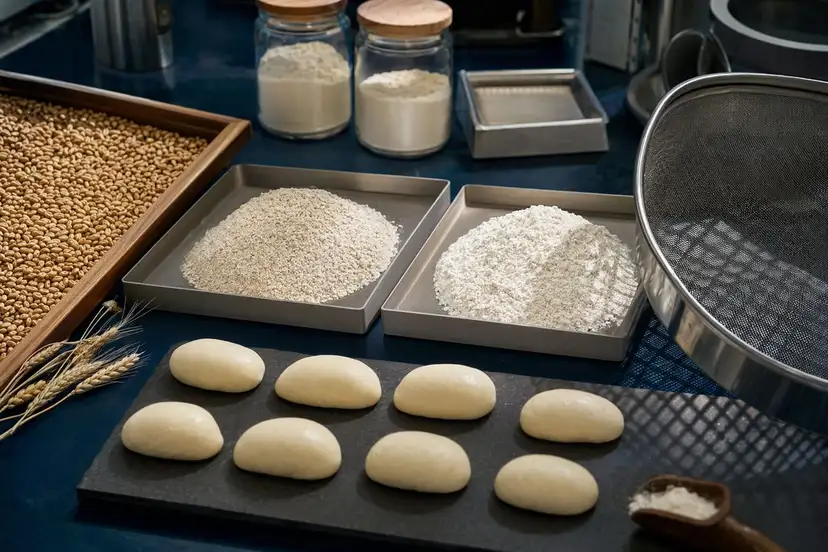
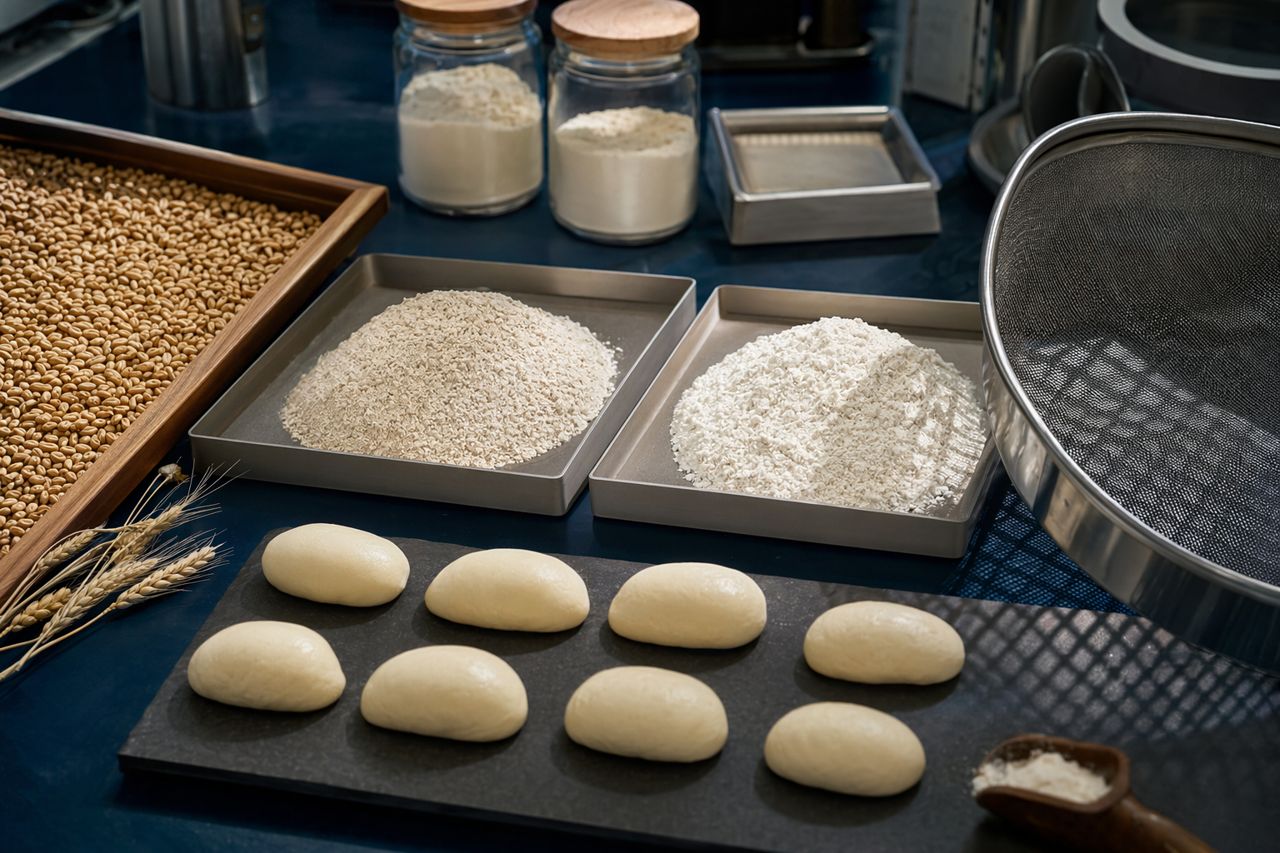
Video concept: A faceless, one-minute visual walkthrough of the correction workflow, moving from wheat variability to lab bake, dosage window, mill trial, and controlled release. The motion language uses macro flour, sifter mesh, dark blue lab surfaces, and stable dough-test curves to show enzyme treatment as a precise mill adjustment.
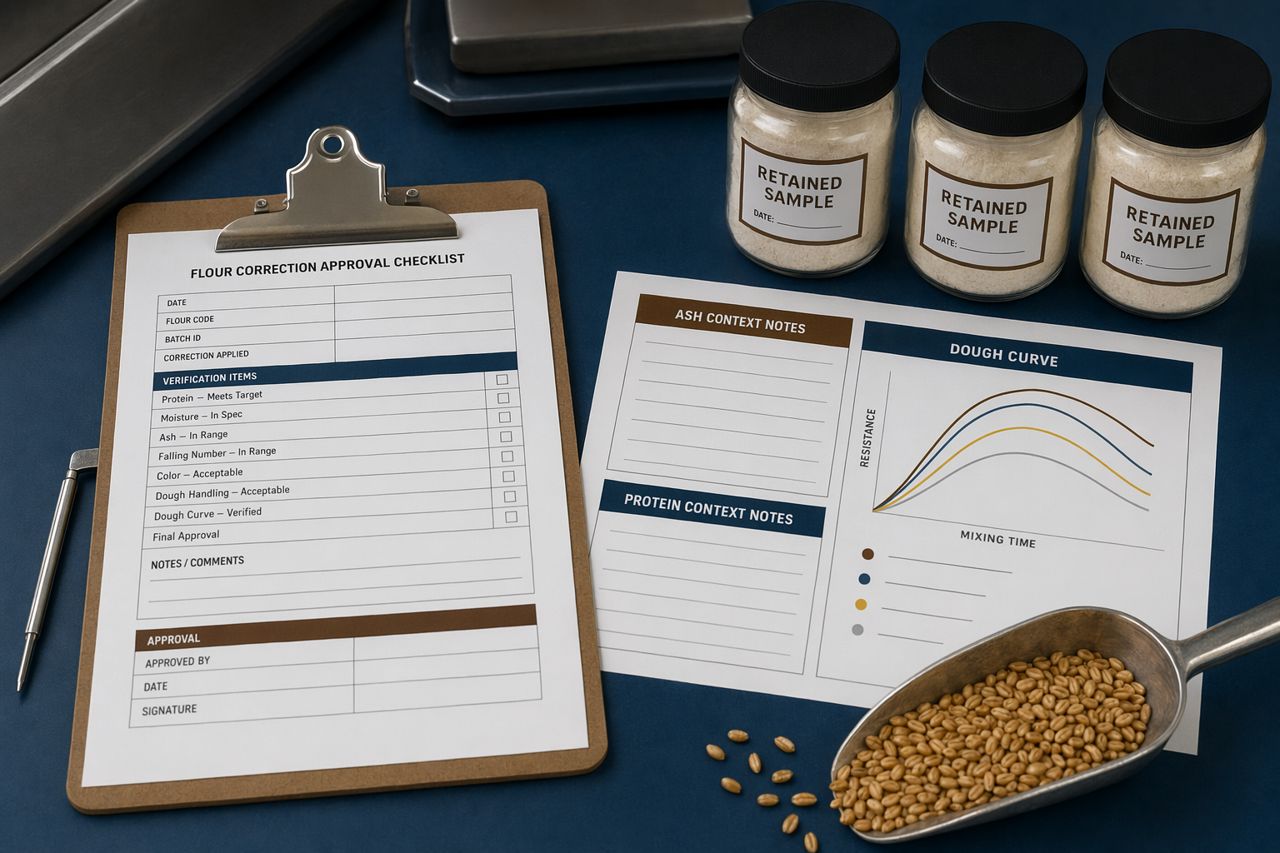
A practical approval checklist
Use this checklist when building or tightening a flour correction workflow.
Before treatment selection
- Define the customer application and complaint or improvement target
- Confirm the flour’s ash, protein, and extraction context
- Review wheat blend, tempering, and milling notes
- Establish untreated flour behavior in the lab bake
During lab validation
- Compare untreated and treated flour under identical conditions
- Test a practical dosage range
- Record dough behavior, not only finished product appearance
- Identify any negative handling effect
- Choose a preferred treatment and dosage window
During mill trial
- Confirm addition point and feeder readiness
- Define sampling timing and retention samples
- Verify the trial flour is representative
- Complete release checks before customer shipment
- Record who approved the release
After approval
- Link the correction to customer specification and flour grade
- Store the lab and mill trial record
- Define re-validation triggers
- Review performance after first commercial use
Common failure points to avoid
Treating the symptom without naming the use case
A correction that helps one application can harm another. Always connect the treatment objective to the customer’s process.
Approving from one attractive bake result
One strong loaf, sheet, or product sample does not prove routine control. Approve based on repeatable behavior and a defined dosage window.
Ignoring ash and protein context
Ash and protein do not tell the whole story, but they influence how correction should be interpreted. A flour’s analytical position matters when judging treatment response.
Scaling without mill-trial discipline
Lab correction must be confirmed under actual production conditions. Addition point, mixing, sampling timing, and release authority all matter.
Failing to define re-validation triggers
Wheat quality and customer requirements move. A good approval workflow tells the mill when to check again.
Build correction into the mill’s release rhythm
The best enzyme correction programs are calm, documented, and practical. They help quality teams handle wheat variation without losing control of customer specifications.
For flour mills, the outcome should be simple: more consistent dough behavior, clearer release decisions, better communication with production, and fewer surprises at the customer’s line.
Aleuron Works works with mills to structure enzyme treatment trials from lab bake through mill release, with support for dosage control, validation planning, and application-specific performance review.
Planning a flour correction trial? Request a quote through the on-site form and share your flour grade, target application, current specification, and the behavior you need to correct.
Request a quote