Falling Number, Damaged Starch, and the Mill QA Signals Behind Flour Correction
For a flour mill, correction is not cosmetic. It is a controlled response to wheat variation, extraction realities, starch condition, and customer performance requirements. When falling number shifts, damaged starch rises, or dough behavior starts moving outside the customer’s process window, the question is not simply whether the flour is “in spec.” The question is whether the mill can bring flour performance back into a stable, repeatable range without disrupting ash, protein positioning, water absorption, or downstream dough handling.
Aleuron Works supports mills that need an enzyme supplier for flour mill treatment with practical guidance, trial structure, and correction systems built around production reality. We work with quality, milling, and technical sales teams to turn mill QA signals into controlled enzyme decisions.
Why falling number is only part of the correction picture
Falling number is often treated as the headline signal for alpha-amylase condition, sprout influence, and starch breakdown potential. It is useful because it gives the mill an early indication of how starch may behave in dough and during baking. But it should not be read in isolation.
A flour can carry a falling number that appears acceptable and still show uneven dough behavior if damaged starch, granulation profile, water absorption, or flour stream balance has shifted. Likewise, flour with a low or unstable falling number may not require the same corrective approach across all product applications.
For mill QA teams, falling number is best treated as a control signal within a broader performance map:
- Wheat crop and intake variation
- Tempering and milling severity
- Damaged starch level and distribution
- Extraction target and ash position
- Protein quality, not just protein quantity
- Water absorption behavior
- Dough development and tolerance
- Customer line sensitivity
The most effective flour correction programs connect these signals instead of reacting to one number in isolation.
Damaged starch: the signal that links milling mechanics to dough behavior
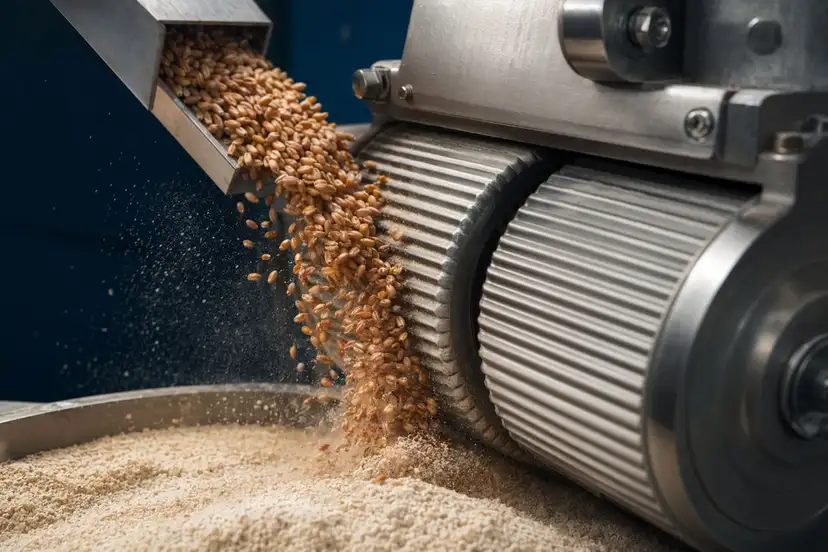
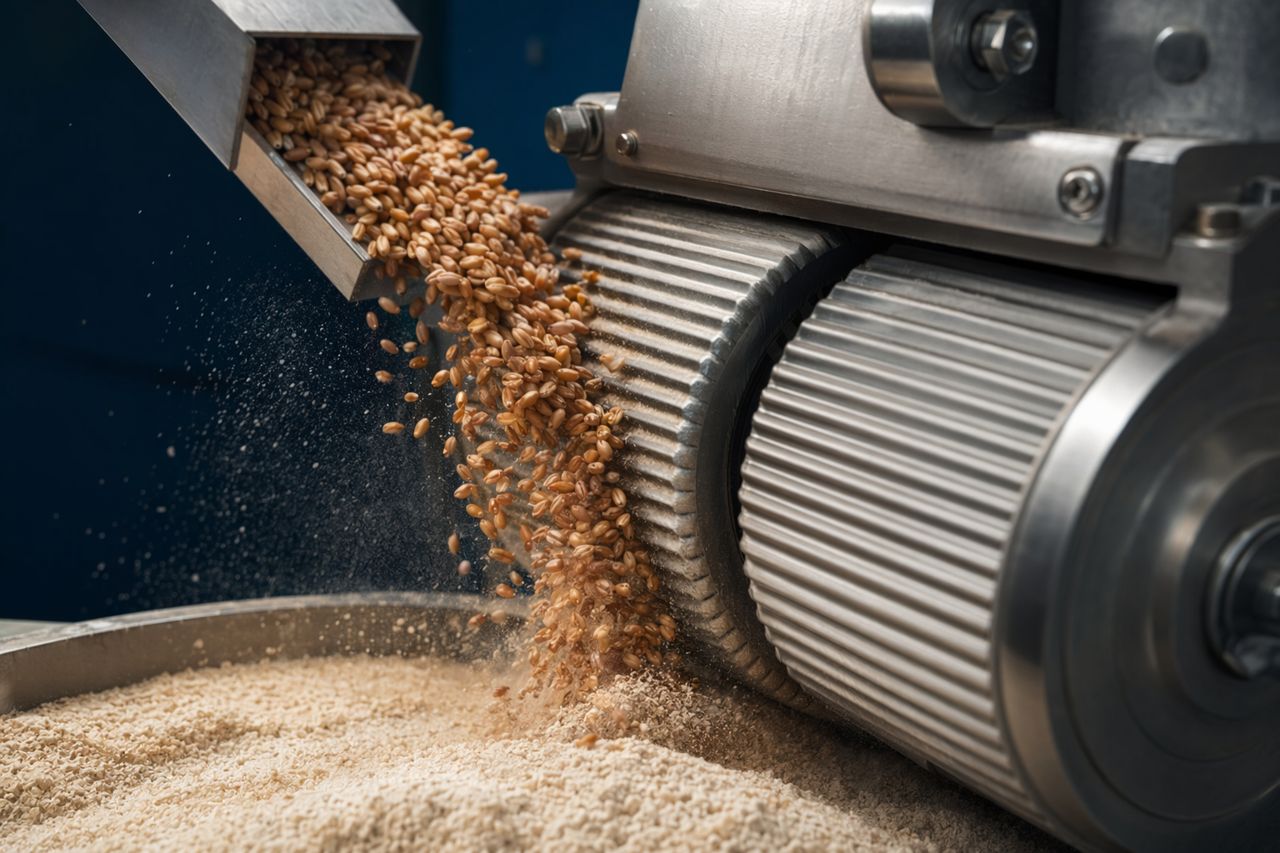
Damaged starch is created during milling as starch granules are fractured by roller pressure and grinding intensity. Some damaged starch is expected and beneficial because it influences water absorption and fermentation response. Too much, or too much variation, can create problems for customers.
In practical terms, damaged starch affects:
- Dough water demand
- Mixing time and tolerance
- Stickiness or slackness
- Gas production and retention balance
- Crumb texture and volume consistency
- Fermentation robustness
- Performance on automated bakery lines
This is why damaged starch belongs in the same conversation as falling number. Falling number gives a view of starch breakdown potential. Damaged starch indicates how much starch surface is exposed and available to interact with water and enzymes. Together, they help a mill understand whether correction should be modest, protective, or more assertive.
When flour correction becomes necessary
Correction is usually considered when flour performance begins drifting away from the commercial promise made to customers. The trigger may come from internal QA, customer complaints, technical sales feedback, or trial bake results.
Common mill-floor scenarios include:
1. New wheat intake changes dough behavior
A new wheat parcel may meet basic purchasing criteria but behave differently in production flour. The mill sees a change in falling number, starch damage, or absorption. Customers notice altered fermentation response, weaker oven spring, or handling differences.
2. Extraction adjustments shift flour functionality
A change in extraction can affect ash, starch damage, protein distribution, and enzyme response. Even when the flour meets compositional targets, dough behavior may require correction to maintain customer continuity.
3. Milling intensity increases damaged starch
More aggressive grinding can improve yield or meet granulation targets, but it may also increase damaged starch. This can raise absorption and change dough feel, particularly in products that depend on tight handling windows.
4. Customer specs tighten
Large bakeries and industrial users often define flour by functional behavior, not only by certificate values. If dough development, extensibility, absorption, or fermentation performance narrows, flour correction has to become more precise.
5. Crop year variation becomes commercial risk
Crop transitions are one of the strongest reasons to validate a correction strategy before full-scale production. Enzyme treatment can help bridge natural wheat variability, but only when selected and dosed against the actual flour system.
Enzyme treatment is a mill adjustment, not a generic additive
For a flour mill, enzyme use should be managed like any other precision control point: defined objective, controlled dosage, verified distribution, measured flour response, and customer validation.
Aleuron Works focuses on enzyme solutions that support flour functionality in areas such as:
- Starch modification and fermentation response
- Dough handling and tolerance
- Volume and crumb consistency
- Extensibility and machinability
- Shelf-life support, where appropriate for the flour application
- Reduction of customer-side variability caused by flour drift
The goal is not to “add enzyme.” The goal is to correct a defined performance gap while protecting the mill’s specification position.
Reading falling number and damaged starch together
A practical correction conversation starts with pattern recognition.
If falling number is trending lower, the mill may be dealing with higher native amylase influence or sprout-related variability. If damaged starch is elevated, water absorption and enzyme access may increase. If both signals are unstable, a standard correction rate may not hold the customer’s process steady.
Quality teams should ask:
- Is the falling number shift linked to wheat intake, storage, or blending?
- Has milling intensity changed damaged starch or granulation?
- Are ash and protein still aligned with the flour grade?
- Is the customer seeing stickiness, slow proof, weak volume, or handling loss?
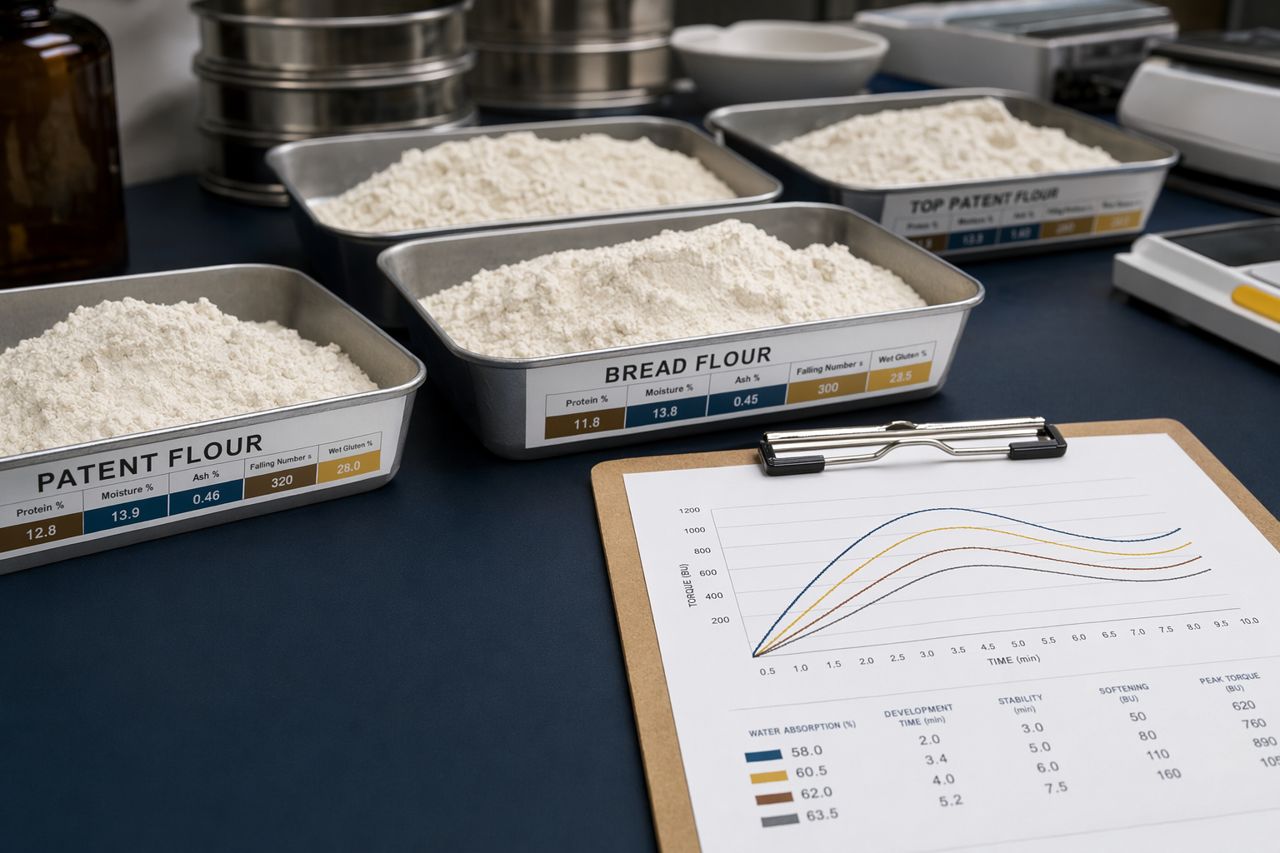
- Are internal rheology curves showing a repeatable pattern or random noise?
- Does the proposed enzyme correction improve performance without creating over-response?
These questions turn lab data into a treatment decision.
What a good flour mill enzyme trial should prove
A flour mill treatment program should be validated before routine use. Trial work does not need to be complicated, but it should be disciplined enough to separate true correction from normal variation.
A strong trial structure includes:
-
Clear objective
Define the commercial problem: falling number drift, damaged starch impact, customer handling issue, fermentation response, volume consistency, or flour grade continuity.
-
Representative flour samples
Use flour that reflects actual production, including the stream balance and wheat blend likely to be used at scale.
-
Controlled dosage ladder
Test a sensible dosage range rather than a single guess. The objective is to find the practical operating window, not the maximum response.
-
Relevant performance checks
Review dough behavior, water absorption, development, tolerance, extensibility, fermentation behavior, and finished product results according to the flour’s end use.
-
Customer-oriented interpretation
The best result is not always the strongest analytical shift. It is the treatment point that gives the customer stable processing and the mill predictable release criteria.
-
Scale-up confirmation
Validate dosing accuracy, blending uniformity, and production repeatability before committing to routine correction.
Dosage control matters as much as enzyme selection
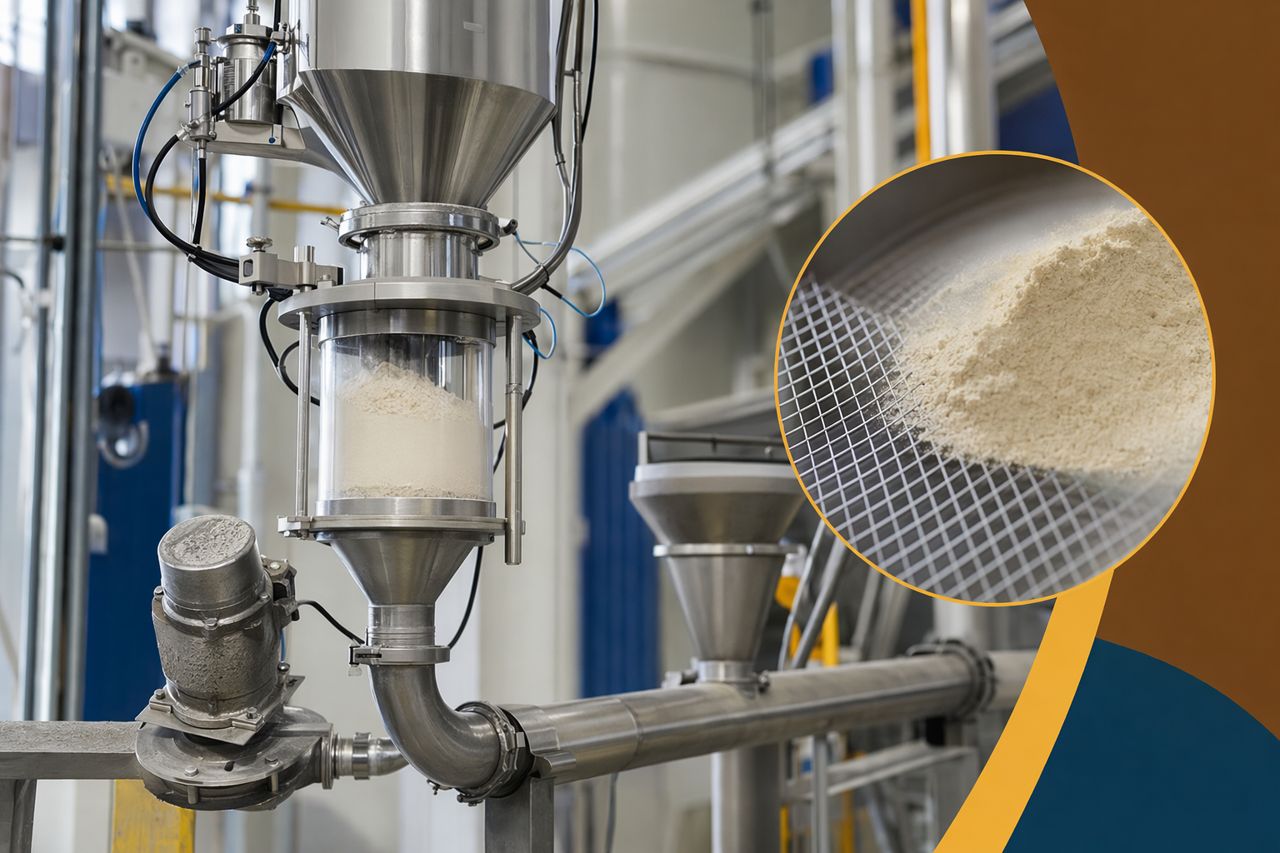
Even a well-selected enzyme system can fail if dosage control or distribution is inconsistent. Flour mills need correction programs that fit their actual equipment layout, micro-dosing capability, flour transfer points, and blending residence time.
Important operational questions include:
- Where will the enzyme treatment enter the flour stream?
- Is the dosing point stable across production rates?
- Can the mill verify addition consistency during long runs?
- Does the treatment distribute uniformly before packing or bulk load-out?
- How will treated and untreated flour be segregated during changeovers?
- What release checks will confirm that treatment remains within the intended window?
Aleuron Works approaches enzyme supply with these mill-floor constraints in view. The right product still needs the right implementation.
Avoiding over-correction
Over-correction can be as costly as under-correction. Excessive starch modification can push dough toward stickiness, weak handling, or unpredictable fermentation. A treatment that improves one customer application may be unsuitable for another.
This is why flour correction should remain application-specific. Bread flour, biscuit flour, noodle flour, pizza flour, and industrial bakery flour do not share the same dough targets. The enzyme system must fit the flour’s commercial destination.
A practical rule for mill QA: correct the performance gap, not the spreadsheet.
What buyers should expect from an enzyme supplier for flour mill treatment
A mill does not need generic claims. It needs technical support that understands flour release, customer specifications, and the consequences of small shifts in production.
A qualified supplier should provide:
- Application guidance based on flour type and customer use
- Trial recommendations that connect QA data with dough performance
- Support for dosage range selection and scale-up
- Compatibility review with existing flour improvers or treatment systems
- Documentation suitable for internal QA and purchasing review
- Practical communication for millers, quality managers, and technical sales teams
Aleuron Works is built for that operating environment: measured, evidence-led, and focused on helping mills produce flour that behaves consistently in customer hands.
Turning QA signals into controlled flour performance
Falling number and damaged starch are not isolated lab values. They are early warnings of how flour may behave in mixing, fermentation, handling, and baking. When these signals are interpreted alongside ash, protein, rheology, and customer feedback, enzyme treatment becomes a precise mill adjustment.
For mills managing variable wheat, changing extraction targets, or demanding customer specifications, the value is clear: fewer surprises, better release confidence, and more consistent flour performance.
Request a quote
If your mill is reviewing falling number drift, damaged starch variation, or a flour correction program for a specific customer application, Aleuron Works can help define a trial-ready enzyme treatment approach.
Request a quote through the on-site contact form and include your flour type, target application, current QA signals, and the performance issue you need to correct.